
- Privacy Policy
- Cookie Policy
- Faqs
- Careers
©MoonlightDesign Ltd
©MoonlightDesign Ltd
August 2026 . 1 minute
read
Written by David Haslehurst
We completed the lighting design for a commercial project in Kent in August 2026: a private housing development.
The local authority required lighting as part of the planning permission, and the biodiversity report found that bats and insects are important to the area. The lighting therefore had to do its job without disturbing the wildlife that uses the site at night.
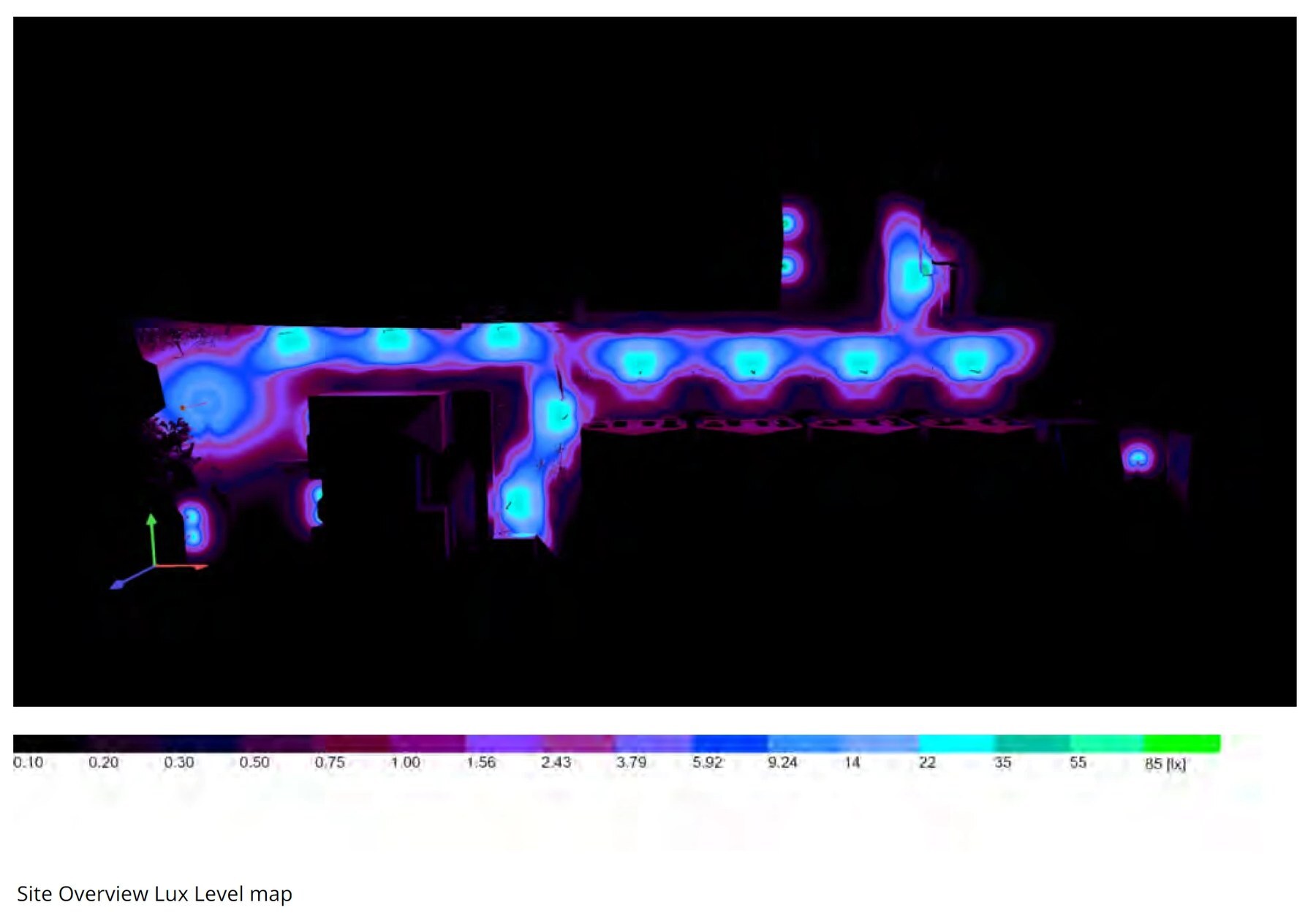
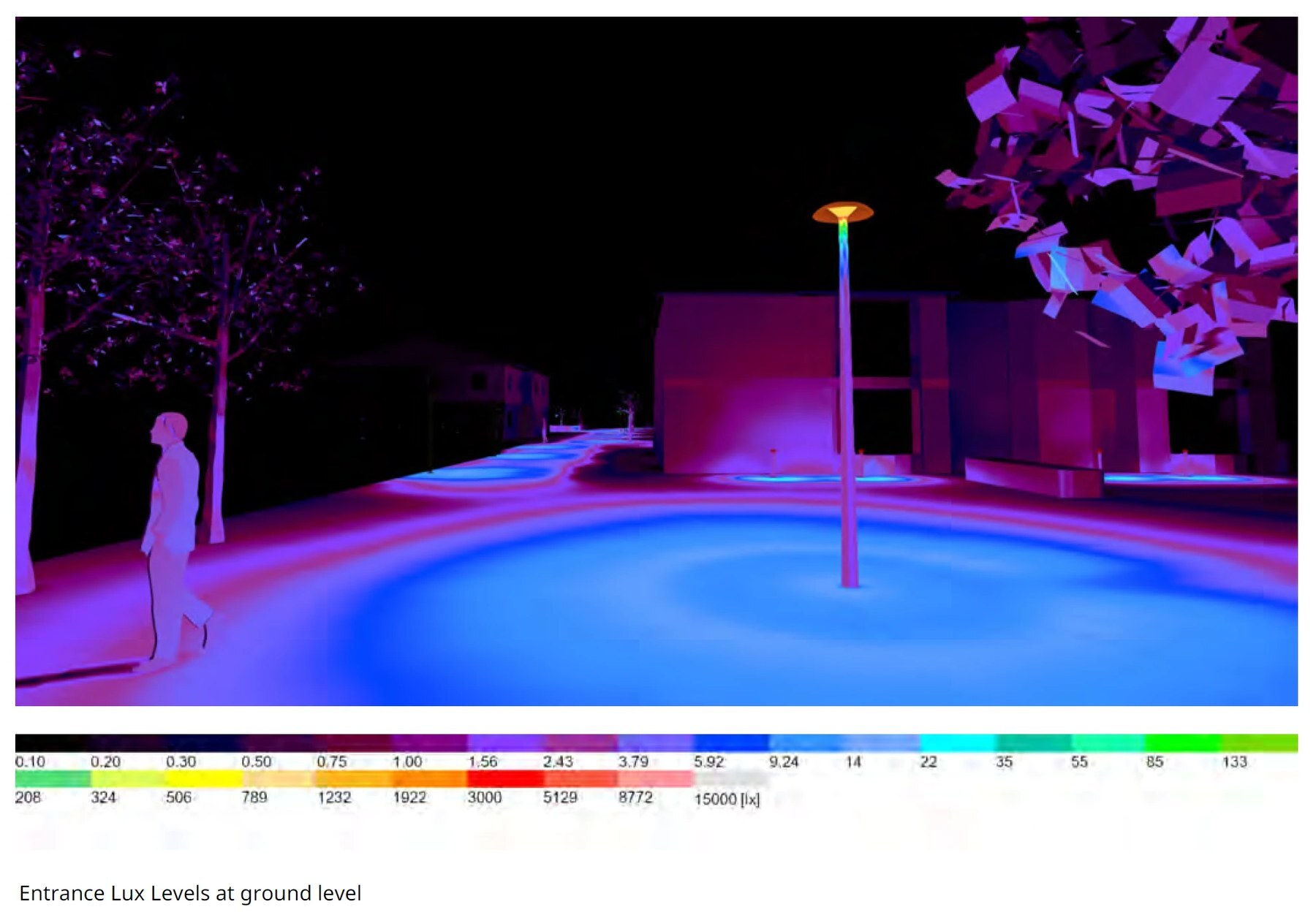
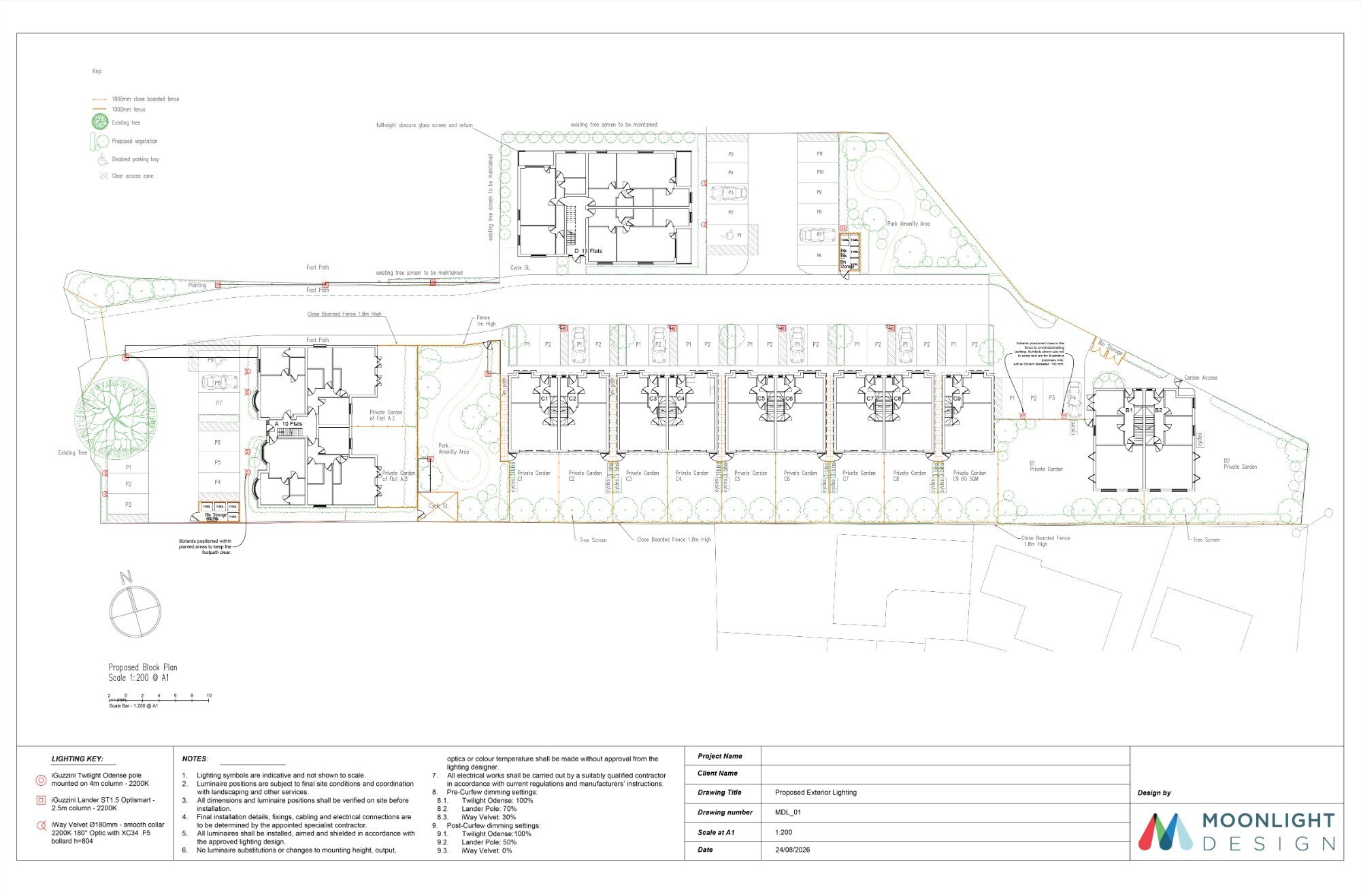
We produced a DIALux report alongside the lighting plans and a full light specification, so the scheme could show that it meets the required lux levels. The fittings are iGuzzini columns and bollards with a warm 2200K light source, shielded and aimed, and the scheme dims on a set schedule before and after curfew.
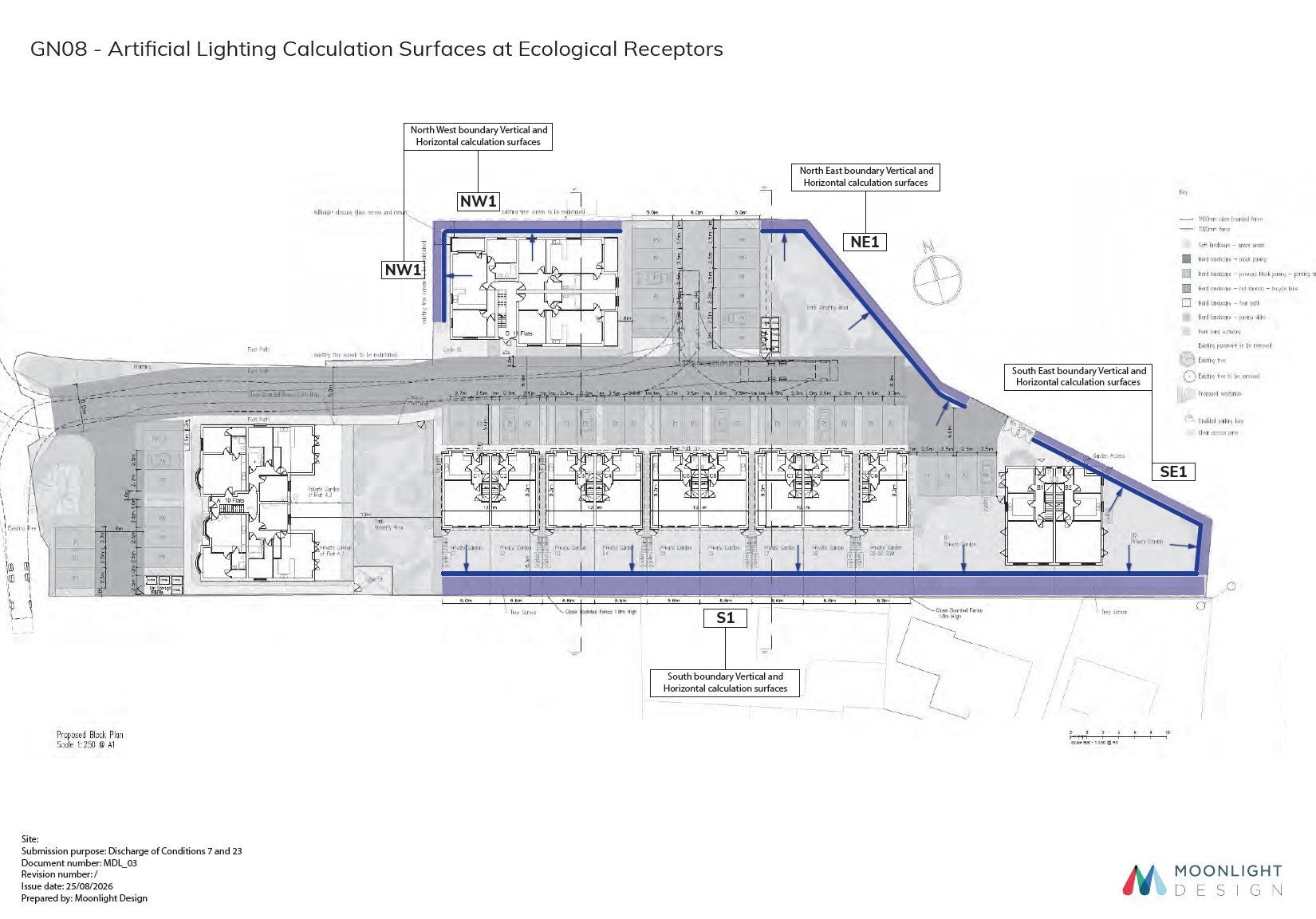
We also checked the light falling on the site boundaries identified as ecological receptors.
We work on a lot of projects where planning permission requires lighting, especially now that wildlife is considered in all building projects. If your scheme has a lighting condition, get in touch with our design team.

